Yunrui Qiu
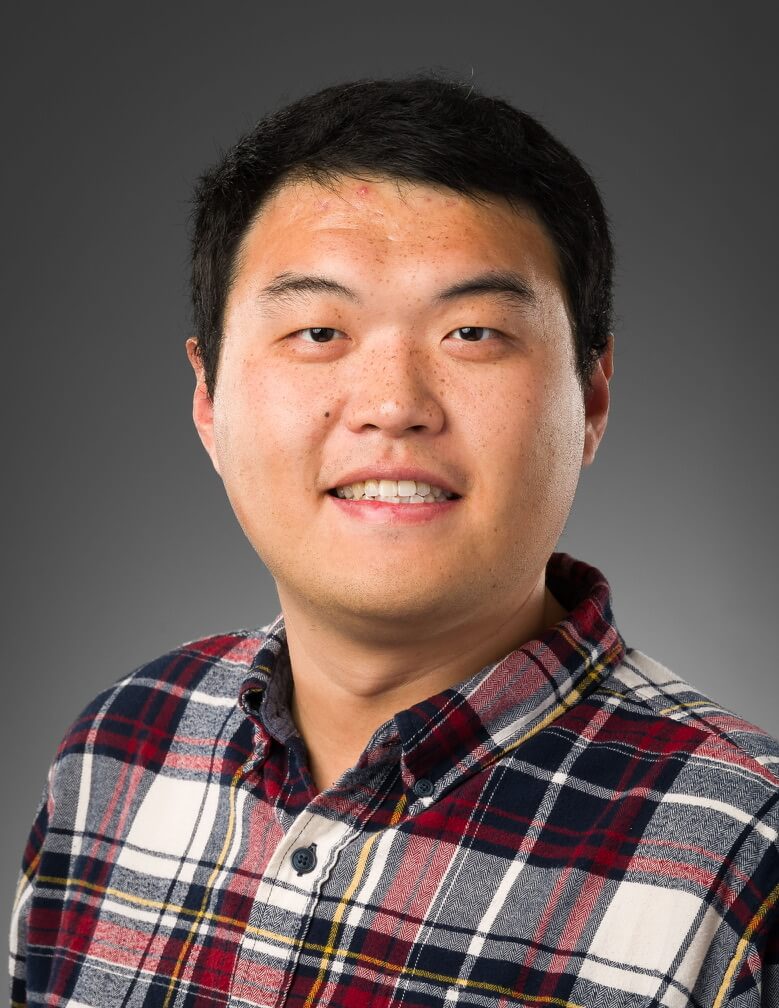
Assistant Professor of Chemistry & Biochemistry
Contact
372 Nieuwland Science Hall
yqiu8@nd.edu
574-631-7667
https://chemistry.nd.edu/people/yunrui-qiu/
Research Cluster
The Qiu research group works at the interface of computational biophysics, statistical mechanics, and artificial intelligence to understand the structural dynamics of complex biophysical systems. Our research integrates physical theory, molecular simulations, and machine learning to investigate how biomolecules fluctuate, interact, and function across multiple spatial and temporal scales. By combining these different approaches, we aim to develop predictive and interpretable computational frameworks that accelerate the design of new therapeutics.
Our research focuses on the development of AI-enhanced molecular dynamics sampling strategies and dynamical modeling approaches. These tools are designed to efficiently generate reliable structural ensembles and predict long-timescale transitions in highly heterogeneous systems. In parallel, we are interested in how physical principles can help improve the interpretability and generalizability of modern AI models. A major application area of the group is the study of RNA structural dynamics and RNA-mediated biological processes. By combining generative AI, large language models, enhanced sampling, and experimental constraints, we aim to build predictive frameworks for RNA structural ensemble prediction, RNA-protein and RNA-ligand interaction modeling, and RNA drug discovery.
Publications
- "Topology, Energy Landscapes and Folding Kinetics of RNA Hairpins” Verma, A.R.; Tiwary, P.; Qiu, Y. bioRxiv. 2026, https://doi.org/10.64898/2026.
09.21.753325 . - "Latent Thermodynamic Flows: Unified Representation Learning and Generative Modeling of Temperature-Dependent Behaviors from Limited Data” Qiu, Y.R.; John, R.; Herron, L.; Tiwary, P. Chemical Science. 2026, 17, 3743–3757.
- "Nucleosome Condensate and Linker DNA Alter Chromatin Folding Pathways and Rates” Biophysical Journal. 2026, 125, 282–293.
- "Non-Markovian Dynamic Models Identify Non-Canonical KRAS-VHL Encounter Complex Conformations for Novel PROTAC Design.” JACS Au. 2024, 4, 3857–3868.